Accessibility Testing - Making the Web More Accessible
A platform that helps teams identify, fix, and automate accessibility issues across web applications.
Designed and built LambdaTest’s Accessibility Testing, shaping its workflows, automation, and reporting to create a seamless experience. The Accessibility DevTools Chrome Extension was introduced to bring accessibility checks directly into the browser, making issue detection a part of real-time development.
Collaborated closely with developers, PMs, and accessibility experts to refine WCAG compliance checks, automated reports, and user interactions, ensuring the tool was both powerful and easy to adopt. Every decision focused on making accessibility testing effortless while aligning with existing developer workflows.
The Challenge
Existing tools were complex and disconnected. We built a smarter, automated solution.
Accessibility testing was often overlooked or too complex to implement. While tools like Deque’s axe-core provided a foundation, they weren’t built for seamless automation.
At LambdaTest, the need became even more evident when the company aimed to achieve WCAG certification. Instead of relying solely on third-party tools, the decision was made to build an in-house accessibility testing platform.
Manual & time-consuming – Most accessibility checks required separate audits, slowing down releases.
Lack of integration – Existing tools didn’t fit naturally into QA workflows or test automation.
Technical barriers – Developers struggled with complex reports, making accessibility fixes harder to implement.
My Approach
The challenge wasn’t just building an accessibility tool—it was ensuring teams actually used it without slowing down their process. The solution had to be automated, intuitive, and actionable.
Leveraged axe-core, but enhanced it
Used Deque’s open-source axe-core as a foundation, but improved workflows for better usability and automation.
Integrated into automation flows
Designed a system where QA teams could add a simple hook, letting LambdaTest handle accessibility testing in the background.
Prioritized actionability
Created structured, easy-to-understand reports that helped teams fix issues fast, not just flag them.
Built a real-time debugging tool
Designed the Accessibility DevTools Chrome Extension, enabling developers to inspect and resolve issues instantly.
Collaborated across teams
Worked closely with engineers, PMs, and accessibility experts to align the tool with real-world development needs.
Key features
Bringing speed, intelligence, and simplicity to test automation
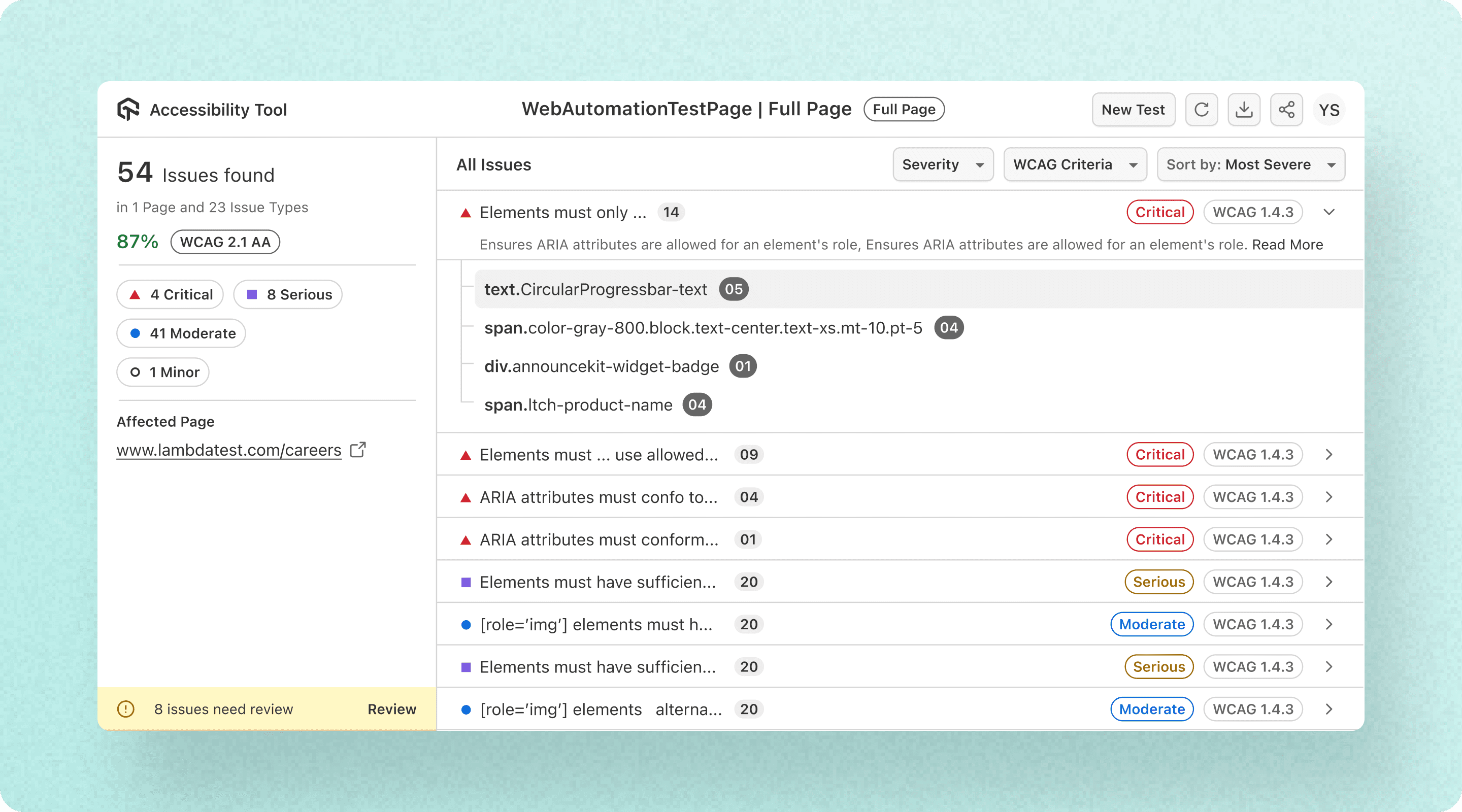
Swift Issue Discovery
Instantly detect and resolve accessibility errors, ensuring consistent compliance and a frictionless user experience.
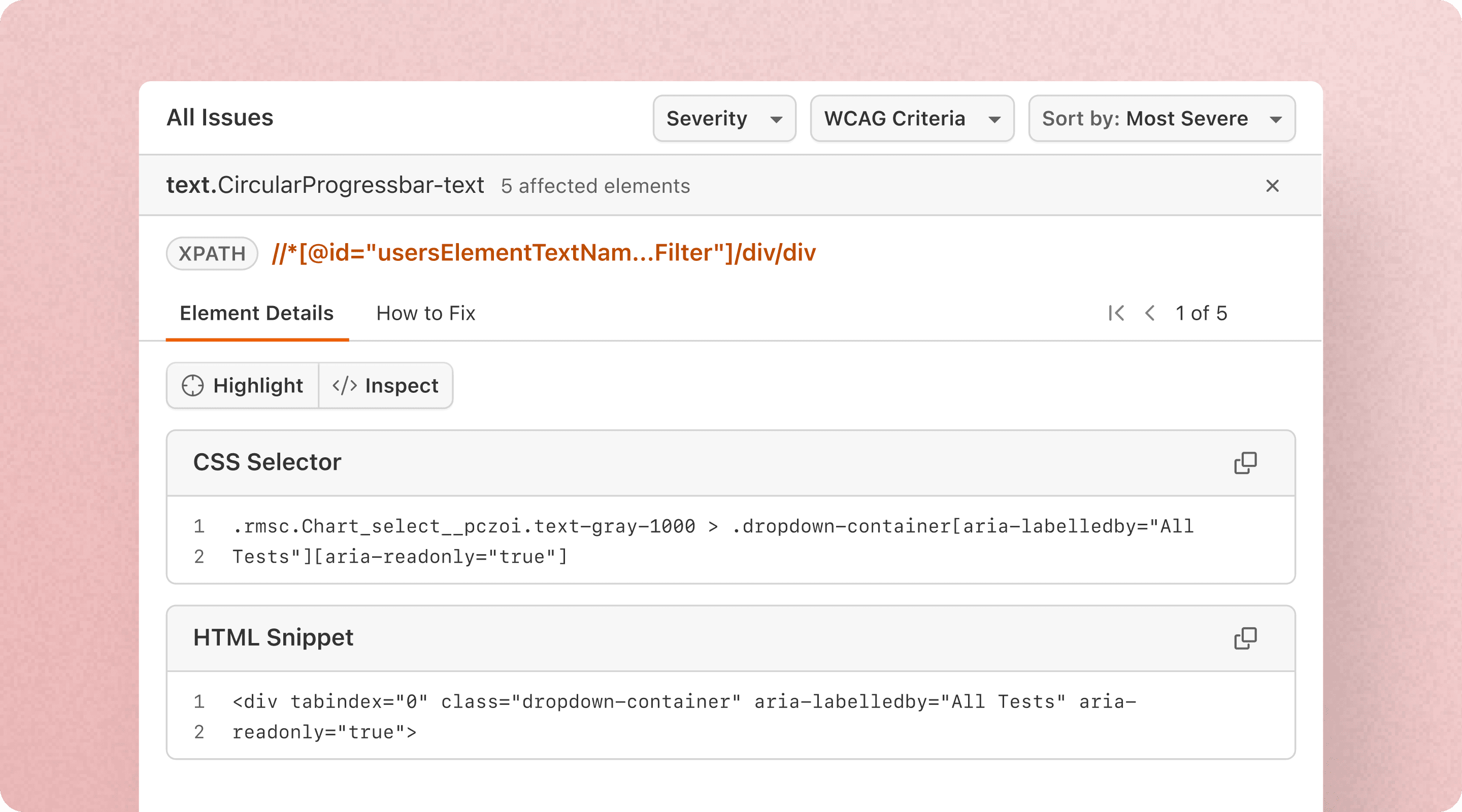
Addressing Critical Concerns
Automatically group, classify, and prioritize accessibility issues, enabling teams to focus on high-impact fixes first.
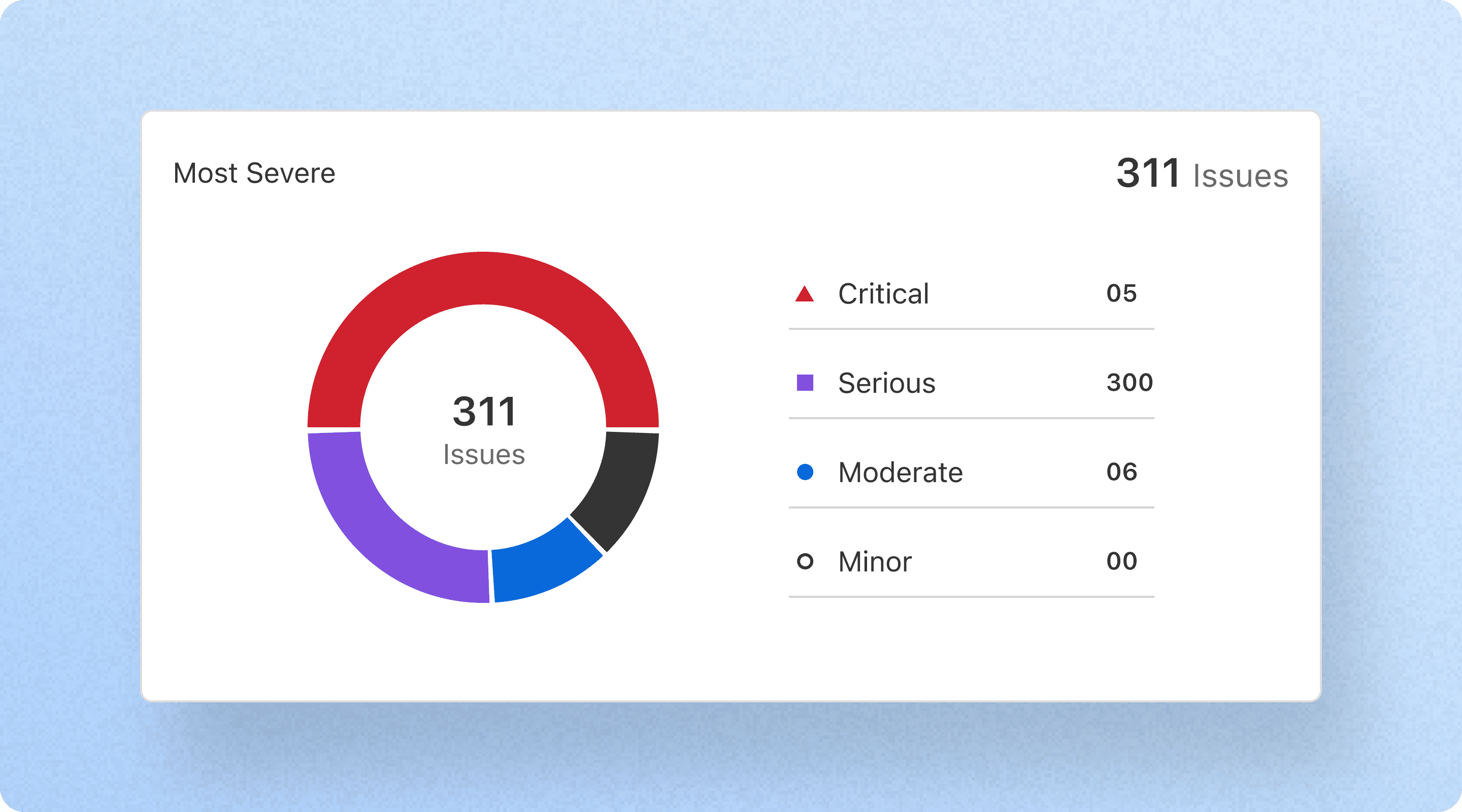
Effortless Health Monitoring
Track accessibility status with a centralized dashboard, making compliance monitoring proactive and seamless.
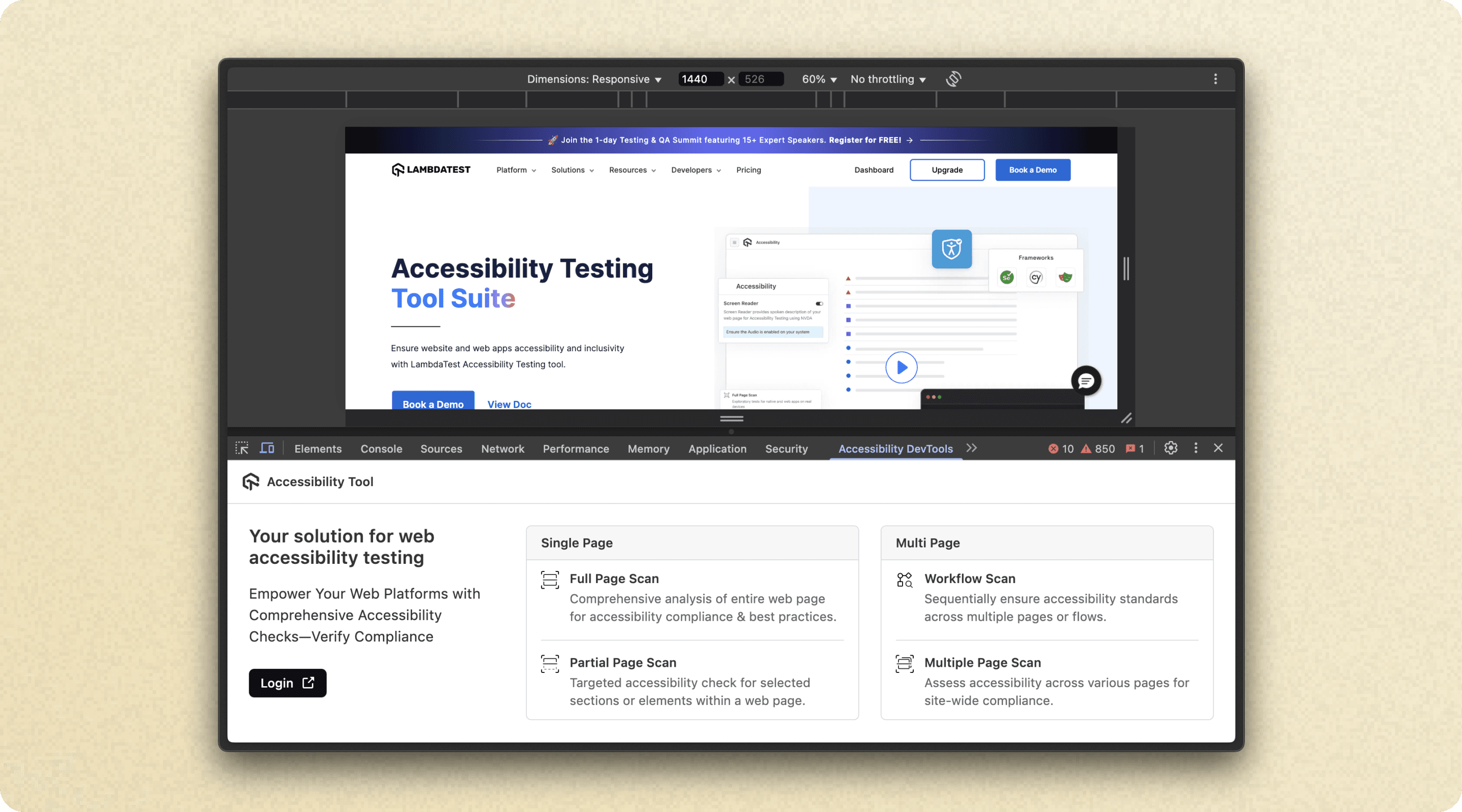
Accessibility DevTools Chrome Extension
Run standards-compliant evaluations across multiple pages, detect issues, and generate reports—all directly within the browser.
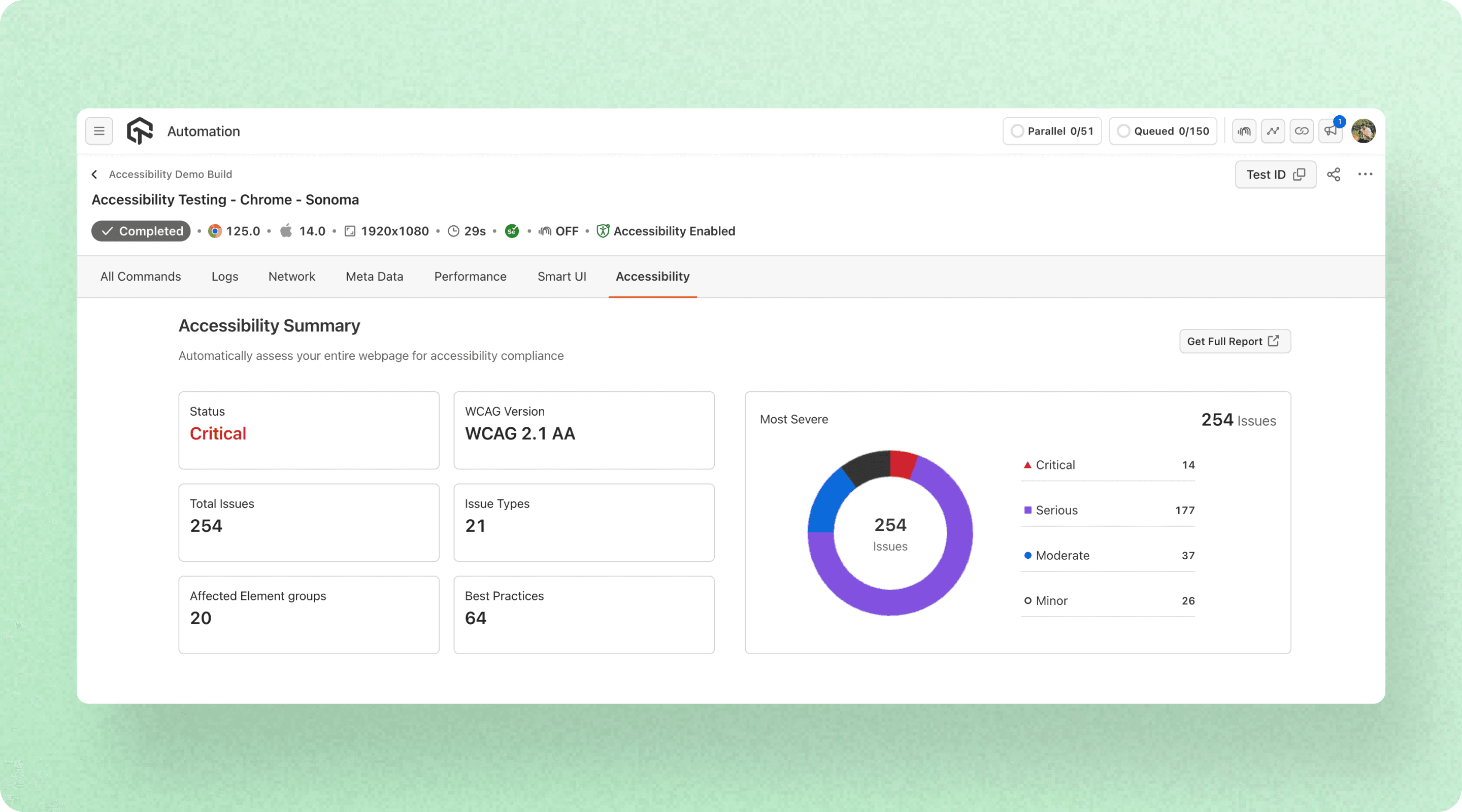
Enhance Testing with Automation
Integrate automated accessibility testing with DOM change detection, duplicate issue identification, and detailed WCAG compliance reports.
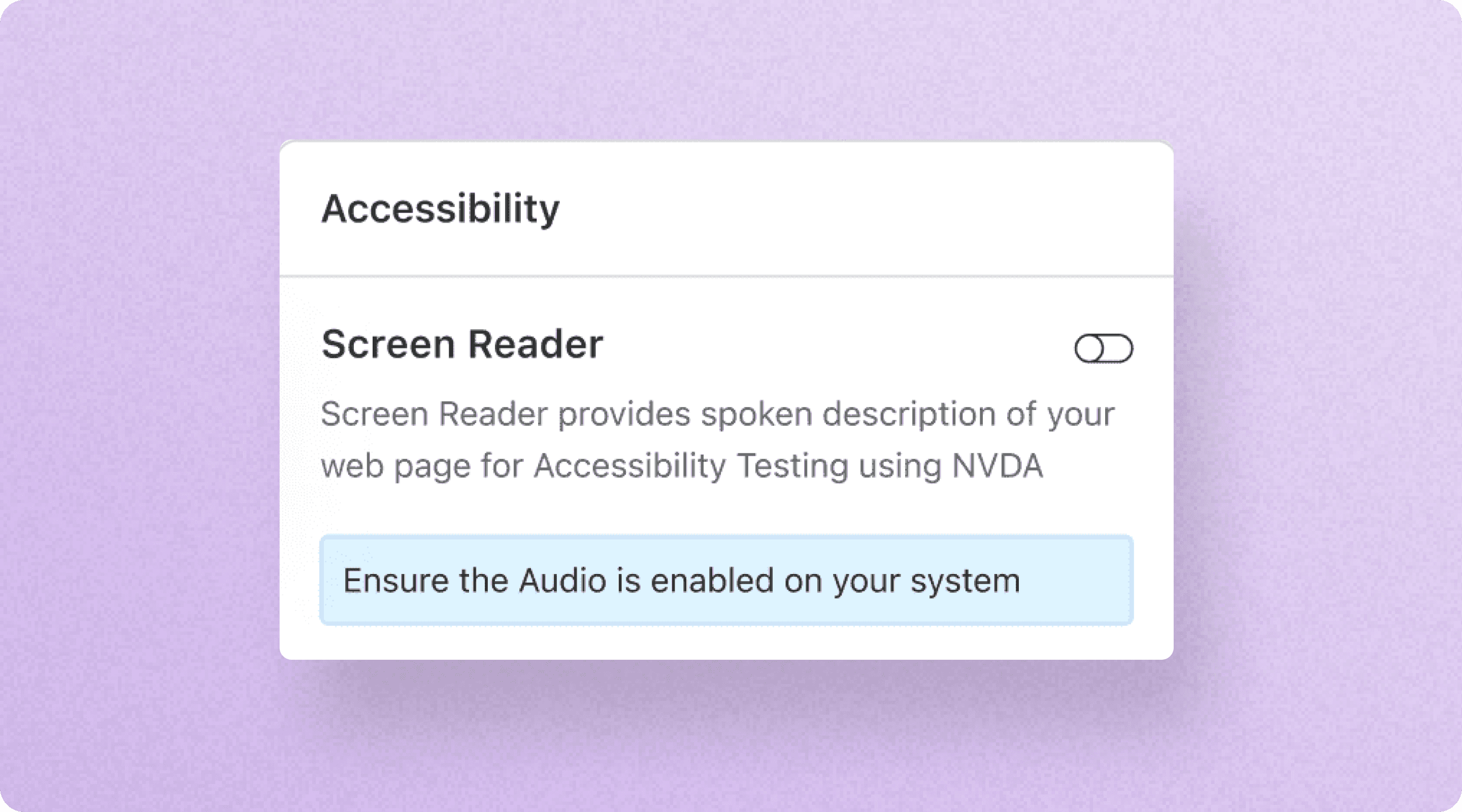
Screen Reader
Support screen reader navigation for visually impaired users and convert audio/visual output into text using the Speech Viewer. Fully compatible with NVDA on Windows and macOS.
Seamless adoption, faster compliance, and inclusive experiences.
LambdaTest’s Accessibility Testing redefined how teams approach accessibility—turning compliance from a complex, manual process into an automated, seamless workflow.
By embedding accessibility into every stage of development, LambdaTest made compliance a built-in part of testing—not a last-minute fix.
Adopted effortlessly – Teams integrated accessibility testing into their existing QA and development workflows with minimal effort.
Faster compliance – Automated checks and real-time issue detection reduced time spent on accessibility fixes.
More inclusive products – Developers, testers, and PMs could proactively identify and resolve issues before release, ensuring a better experience for all users.